Commercial fire alarm system installation: key compliance points for business owners
Commercial fire alarm system installation is not just a construction task. For business owners, it is a compliance decision that affects life safety, inspections, daily operations, and long-term liability. In the U.S., the fire problem in nonresidential buildings is still significant. The U.S. Fire Administration estimates that 2023 saw 110,000 nonresidential building fires, causing 130 deaths, 1,200 injuries, and more than $3.16 billion in dollar loss.
That alone is a good reason to treat fire alarm planning seriously. It is also worth noting that electrical malfunction remained a major issue in nonresidential properties in 2023, with an estimated 7,400 fires and $354.4 million in dollar loss. For many owners, that makes early detection, clear notification, and dependable maintenance less of a box to check and more of a practical business protection measure.
A well-planned system helps people evacuate quickly, helps first responders understand what is happening, and helps your business avoid costly rework when inspectors find problems late in the project. The key is knowing that compliance does not begin on installation day. It starts much earlier, with the code path, occupancy type, documentation, and ongoing maintenance plan.
Commercial fire alarm system installation starts with the right code path
One of the biggest mistakes business owners make is assuming there is one universal fire alarm rulebook. In practice, requirements depend on the codes and standards your jurisdiction has adopted and on the authority having jurisdiction, often called the AHJ, that enforces them. FEMA training material notes that local governments often must formally adopt a fire code through ordinance, and NFPA defines the AHJ as the organization, office, or individual responsible for enforcing code or standard requirements.
That means your first compliance question is not, “Which panel should I buy?” It is, “Which code edition and local amendments apply to this building?” Depending on your location and occupancy, that may involve a locally adopted fire code, building code, accessibility rules, and insurance-related requirements. The earlier you verify that path, the fewer surprises you will face during plan review and final inspection.
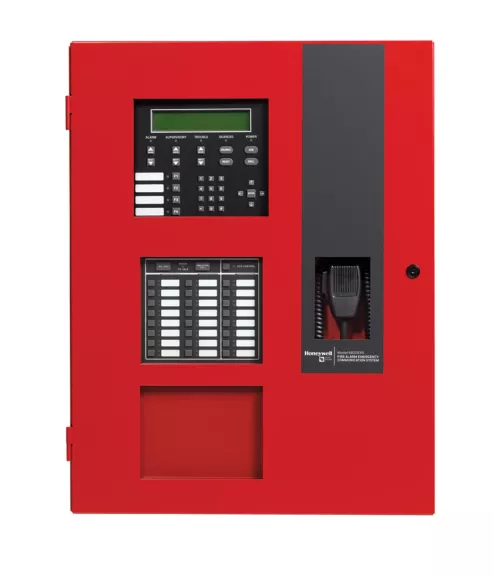
This is where a qualified installer adds value. A professional team should review the building use, occupant load, layout, ceiling heights, special hazards, and whether other systems such as sprinklers, monitoring, access control, or elevator controls need to work with the alarm system. NFPA 72 is the main U.S. standard covering the design, installation, inspection, testing, and maintenance of fire alarm and signaling systems, so it should be part of that conversation from the start.
Occupancy and building use matter more than many owners expect
A fire alarm system for a small office is not designed the same way as a system for a restaurant, mixed-use property, warehouse, school, medical office, or assembly space. Occupancy affects detection, notification, zoning, device placement, emergency communication needs, and whether monitoring or voice evacuation may be required by the applicable code. That is why “standard package” thinking often leads to compliance gaps.
Business owners should also think about future use, not just current use. If you plan to remodel, add tenants, convert storage to customer-facing space, or increase headcount, those changes can affect code requirements. It is usually more cost-effective to design a scalable system at the outset than to rebuild parts of it after occupancy changes trigger new compliance demands.
Another practical point is coordination with other life-safety systems. Fire alarm installation can affect or be affected by sprinkler systems, smoke control, door release, emergency power, mass notification, and monitored communications. A good installer should identify these relationships early, so the system is designed as part of the building’s overall life-safety plan, not as a stand-alone product.
Alarm audibility, visibility, and evacuation planning are not optional details
Even a technically advanced system can fail its purpose if building occupants do not recognize or respond to it quickly. OSHA requires employee alarm systems to provide warning for emergency action or safe escape, to be perceived above ambient noise or light levels, and to be distinctive and recognizable as an evacuation or action signal. OSHA also requires employers to explain reporting methods and establish procedures for sounding alarms.
For business owners, that means compliance is not only about the hardware. It is also about how the signal functions in the real environment. A warehouse with forklifts, a restaurant kitchen, a nightclub, or a manufacturing area may have sound and visibility conditions that change what “adequate notification” looks like. Your installer should evaluate those conditions instead of assuming a generic device layout will work.
Alarm performance also needs to connect to evacuation planning. OSHA states that emergency action plans must be in writing, kept in the workplace, and available for employees to review, with minimum elements such as reporting procedures, evacuation routes, accounting for employees after evacuation, and rescue or medical duties where applicable. In other words, installing the system is only half the job. Your staff also needs to know what to do when it activates.
Permits, acceptance testing, and documentation should be planned before installation day
Many project delays happen because documentation is treated as an afterthought. That is risky. A compliant commercial fire alarm project usually involves permits, plan review, acceptance testing, as-built records, and handoff materials for future service and inspections. NFPA 72 includes requirements not only for system design and maintenance, but also for inspection, testing, maintenance documentation, records, and record retention.
For owners, this matters because paperwork problems can slow occupancy, complicate inspections, and create issues later when a deficiency is found. At a minimum, you should expect a clear record of installed devices, testing results, manuals, monitoring information, and service contacts. That documentation should be easy to access when inspectors, insurers, or facility managers need it.
It is also smart to confirm who is responsible for each stage of the process. Who is pulling permits? Who is coordinating with the AHJ? Who is scheduling acceptance testing? Who is training the staff? Who keeps the maintenance log? When those questions are unanswered, compliance often becomes fragmented.
Ongoing testing and maintenance are part of compliance, not a separate phase
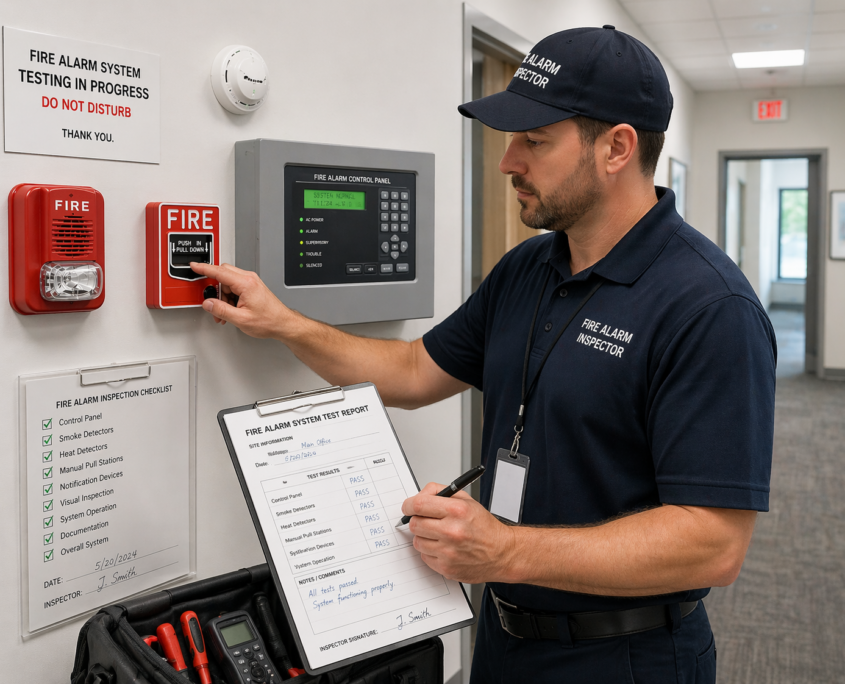
A commercial fire alarm system is not compliant forever just because it passed its first inspection. OSHA requires employee alarm systems to be maintained in operating condition, and it sets testing rules for supervised and non-supervised systems. For example, supervised employee alarm systems must be tested at least annually for reliability and adequacy, while non-supervised systems must be tested every two months.
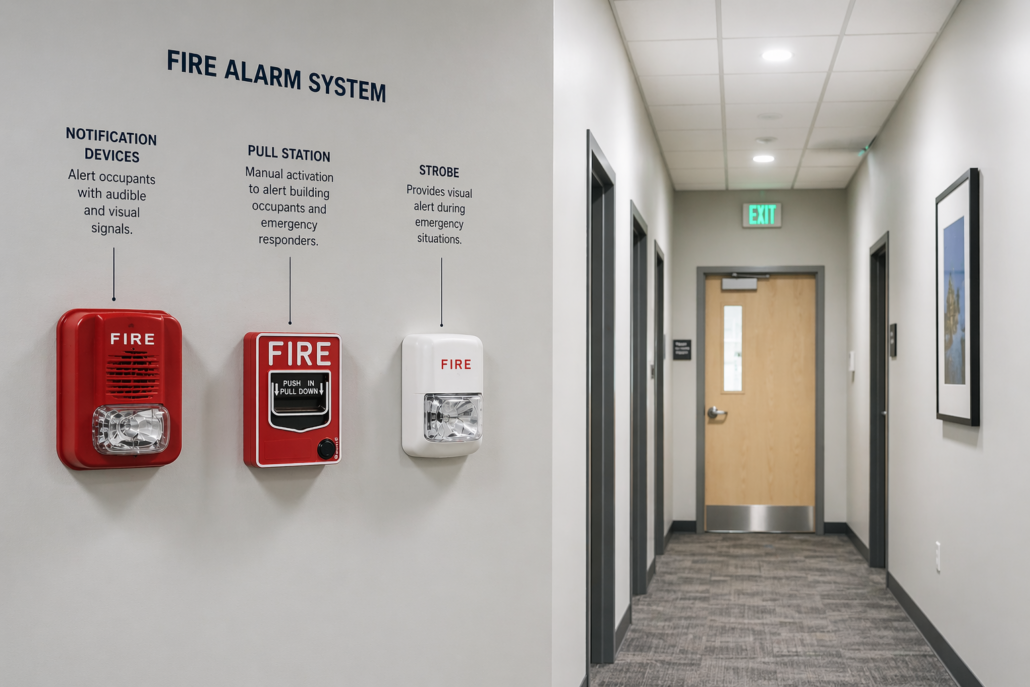
NFPA 72 also treats inspection, testing, and maintenance as core parts of the code, not side issues. That is a useful reminder for owners who think of service visits as optional. A neglected detector, disabled strobe, dead backup battery, damaged pull station, or undocumented impairment can turn a compliant installation into a liability.
This is why business owners should ask about maintenance before signing off on installation. How often will the system be inspected? Who handles impairments? How are deficiencies documented and corrected? How quickly can parts be restored after a test or alarm event? A strong installation partner should be able to answer those questions clearly.
Common compliance mistakes business owners can avoid
The first common mistake is waiting too long to involve the fire alarm contractor. By the time walls are closed and finishes are selected, design changes become slower and more expensive.
The second is assuming the lowest bid covers the full compliance process. A cheaper proposal may leave out coordination, documentation, staff training, monitoring setup, or post-installation service.
The third is failing to match the system to the real building environment. Noise levels, special hazards, multi-tenant arrangements, renovations, and access requirements all affect how the system should be designed and maintained. OSHA’s alarm and emergency planning rules make clear that the real-world employee experience matters, not just the equipment list.
The fourth is forgetting that compliance continues after occupancy. If your business changes use, expands, renovates, or adds new equipment, your fire alarm system may need review as well. A reliable system is not static. It needs to stay aligned with the building it protects.
Final thoughts for business owners
Commercial fire alarm system installation is easiest when it is approached as a full compliance process from day one. The best results usually come from confirming the applicable code path early, matching the system to occupancy and building conditions, planning documentation and acceptance testing in advance, and setting up a real maintenance program after the install is complete. That approach helps reduce delays, improve life safety, and protect the long-term operation of the property.
If you want help planning a fire alarm for commercial building compliance, visit Cyber Technologies to discuss a system that fits your property, your operations, and your inspection requirements.