
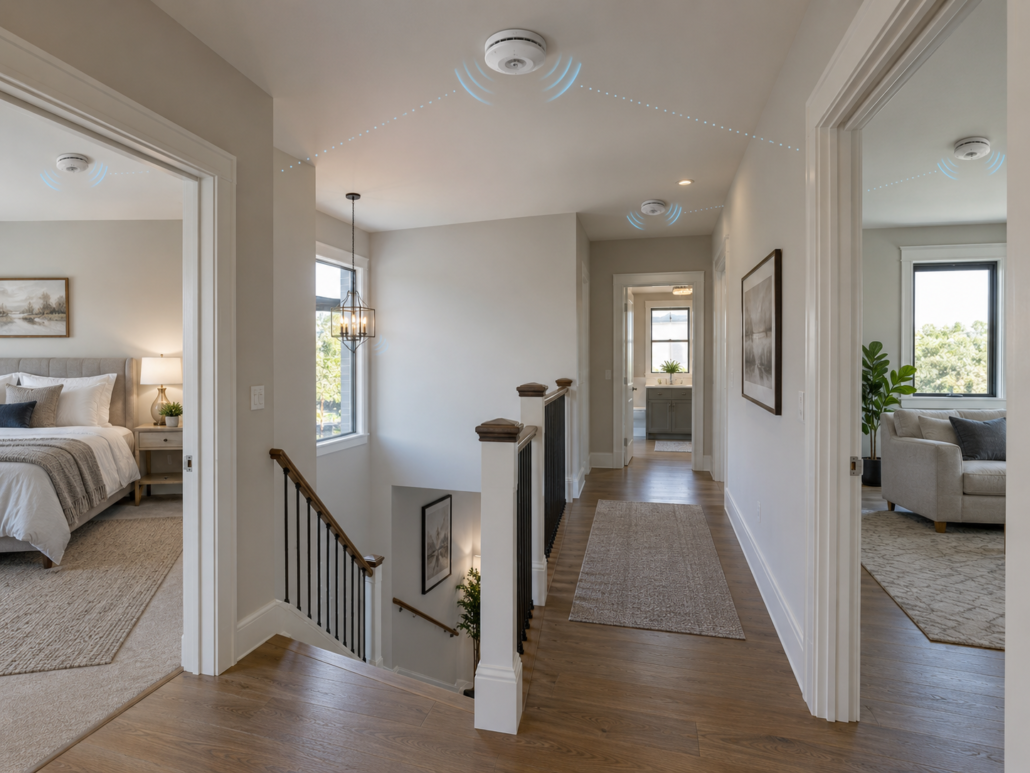
Wireless Fire Alarm Systems for Homes: When They Are the Best Option
Fire safety depends on detecting a problem early enough for people inside the home to respond. While individual smoke alarms remain an important part of residential protection, many homeowners are now considering interconnected wireless systems that allow alarms throughout a property to communicate with one another.
A residential wireless fire alarm system can be particularly useful when installing new wiring would require extensive work inside walls, ceilings, or finished areas. Wireless systems can also make it easier to extend fire detection into additions, renovated spaces, basements, and other parts of a home where existing alarm infrastructure may be limited.
However, wireless technology is not automatically the best choice for every property.
The right fire alarm system for residential building applications depends on the home’s construction, existing wiring, layout, number of floors, sleeping areas, local requirements, and plans for future renovations.
Understanding where wireless technology provides the greatest practical benefit can help homeowners make a more informed decision.
What Is a Residential Wireless Fire Alarm System?
A wireless fire alarm system allows compatible alarms and other components to communicate using radio-frequency signals rather than requiring dedicated communication wiring between every device.
The term “wireless” can sometimes be misleading. It does not necessarily mean that every device operates entirely without wires or electrical power. Depending on the equipment and installation, alarms may use batteries, household electrical power with battery backup, or a combination of the two.
The wireless component generally refers to communication between devices.
For example, if a smoke alarm on the first floor detects smoke, an interconnected system can trigger compatible alarms elsewhere in the house. That coordinated warning can be especially important when a fire starts far from bedrooms or on another level of the property.
The U.S. Fire Administration recommends interconnected smoke alarms because when one alarm sounds, all interconnected alarms can sound. Its guidance also identifies radio-frequency and wireless alarms as options for interconnection without running communication wires between every unit.
Why Reliable Fire Detection Matters
Whether a system is wireless or hardwired, its primary purpose is to provide dependable warning when smoke or fire is detected.
That early warning can make a significant difference.
A National Fire Protection Association report on smoke alarms in U.S. home fires found substantially lower death rates in reported home fires where working smoke alarms were present compared with fires in homes without functioning alarms.
The takeaway for homeowners is not simply to install more devices. The alarms need to be appropriately located, operational, maintained, and capable of alerting occupants throughout the property.
This is where a carefully designed residential fire alarm system differs from placing isolated smoke alarms around a house without considering how they work together.
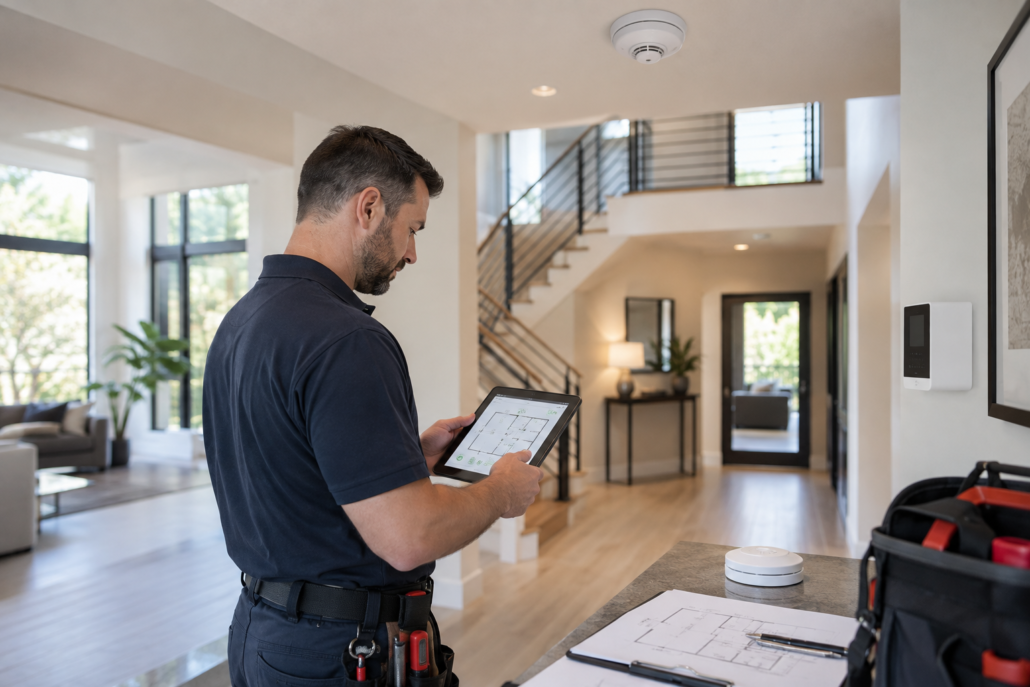
When Are Wireless Fire Alarm Systems the Best Option?
Wireless technology is particularly useful when the physical characteristics of a property make conventional interconnected wiring difficult or unnecessarily disruptive.
Several situations make wireless systems worth considering.
1. Existing Homes Where Running New Wiring Is Difficult
One of the clearest advantages of wireless fire alarms appears in already finished homes.
Creating a conventional wired interconnection may require installers to access:
- Finished ceilings
- Drywall
- Attics
- Basements
- Wall cavities
- Stairwells
- Electrical pathways
Depending on the layout, this can increase both the complexity of the installation and the amount of repair work afterward.
Wireless communication can reduce the need to open finished surfaces solely to connect alarms to one another.
This can make a residential wireless fire alarm system particularly practical for older properties, multi-level homes, and houses where access to existing wiring is limited.
The goal should still be proper protection throughout the home. Wireless technology simply provides another way to achieve interconnected coverage with less structural disruption.
2. Home Renovations and Additions
Renovations often change the way people use a home.
A previously unfinished basement may become a living area. An attic may be converted into bedrooms. A new addition may extend the house beyond the coverage provided by an existing system.
These changes should prompt homeowners to reconsider fire alarm coverage.
Wireless equipment can make it easier to extend an existing compatible system into newly occupied areas without rewiring the entire property.
For example, a homeowner renovating only one section of a house may be able to add interconnected wireless detection without disturbing finished rooms elsewhere.
Professional home fire alarm system installation can determine whether wireless, hardwired, or hybrid equipment is most appropriate for the project.
3. Multi-Level Homes
Fire alarms need to provide warning where people can hear them quickly.
A smoke alarm sounding in a basement may not be as effective for someone sleeping two floors above if the alarms do not communicate with one another.
The U.S. Fire Administration’s smoke alarm guidance recommends installing alarms inside and outside sleeping areas and on every level of a home, including the basement.
Interconnection adds another layer of protection because activation in one location can produce alerts elsewhere.
Wireless communication can make that type of whole-home interconnection easier to establish in properties where the necessary communication wiring does not already exist.
4. Historic or Architecturally Detailed Homes
Installing new wiring can be particularly challenging in historic homes.
Original plaster, decorative ceilings, detailed molding, finished woodwork, and other architectural elements may make invasive installation undesirable.
Wireless technology can reduce the amount of structural work required to connect devices throughout the property.
However, preserving architectural finishes should never come at the expense of appropriate alarm positioning.
An installer still needs to evaluate factors such as the home’s floor plan, ceiling configurations, bedrooms, stairways, existing electrical system, and wireless signal reliability.
For some historic properties, a carefully planned wireless system can offer a practical balance between modern fire protection and preserving existing architectural details.
5. Homes That May Need Future Expansion
A home’s layout is not always permanent.
Homeowners may eventually:
- Add another bedroom
- Finish a basement
- Convert an attic
- Build an addition
- Create an accessory living space
- Reconfigure existing rooms
One advantage of certain wireless systems is scalability.
Additional compatible devices may be easier to incorporate because installers do not necessarily need to create new communication wiring every time coverage expands.
Future expansion should still be considered during the initial system design. Homeowners should understand the system’s device capacity, compatibility requirements, communication range, and potential upgrade path.
Wireless vs. Hardwired Fire Alarm Systems
There is no single system type that is best for every home.
Wireless equipment provides important installation advantages, especially in existing properties, while hardwired systems may be highly practical when wiring can be incorporated during construction.
| Consideration | Wireless Fire Alarm System | Hardwired Fire Alarm System |
| Device communication | Uses compatible wireless communication | Often uses physical interconnection wiring |
| Finished homes | Usually requires less structural disruption | New wiring may require access to walls or ceilings |
| Future expansion | Often easier with compatible devices | Additional wiring may be necessary |
| New construction | Can be used depending on design | Wiring can be planned during construction |
| Historic properties | Can minimize invasive installation work | Installation may affect finished architectural surfaces |
| Power requirements | Vary depending on equipment | Commonly connected to household electrical power with backup |
| Maintenance | Batteries, communication, and devices require testing | Backup batteries and devices require ongoing testing |
A newly constructed home may provide an ideal opportunity to install wiring before walls and ceilings are closed.
An existing finished home may present the opposite situation, making wireless technology considerably more practical.
In some cases, the best solution may be a hybrid system that combines wired and wireless components.
What to Consider Before Choosing a Wireless Fire Alarm System
The convenience of wireless communication should not be the only factor in a homeowner’s decision.
Several technical and practical considerations influence whether the finished system will work reliably.
Wireless Signal Reliability
Compatible devices must be able to communicate consistently throughout the property.
Distance, building materials, floors, walls, and the overall size of the house can influence wireless communication.
A professional installation should include testing to confirm that devices communicate properly from their intended locations.
This is particularly important in larger homes and properties with unusual layouts or dense construction materials.
Proper Alarm Placement
Wireless flexibility should never become an excuse to install alarms wherever installation happens to be easiest.
The U.S. Fire Administration recommends smoke alarms inside every bedroom, outside each separate sleeping area, and on every level of a home, including the basement.
Manufacturer instructions and applicable local requirements also need to be followed.
Correct positioning matters because smoke movement, ceilings, walls, vents, and room layouts can influence detection.
Detection Technology
Not every smoke alarm detects fires in exactly the same way.
Research from the National Institute of Standards and Technology on residential smoke alarm technologies has examined how different alarm technologies respond to different types of fires.
Photoelectric and ionization technologies have historically demonstrated different response characteristics depending on whether a fire is predominantly smoldering or flaming.
For homeowners, the important point is that the type of detection technology matters alongside whether the alarm communicates wirelessly.
System selection should consider both communication and appropriate fire detection.
Power and Battery Backup
Wireless communication does not eliminate power requirements.
Depending on the system, devices may rely on replaceable batteries, sealed long-life batteries, electrical power with battery backup, or another approved configuration.
Before installation, homeowners should understand:
- How each device is powered
- Whether batteries require replacement
- How low-battery notifications work
- What happens during a power outage
- How frequently devices should be tested
- When individual alarms need replacement
Backup power is especially important because a fire detection system needs to remain operational when normal electrical service is interrupted.
Compatibility Between Devices
Not every wireless alarm communicates with every other wireless alarm.
Components generally need to belong to a compatible system or ecosystem.
This becomes especially important when homeowners plan to expand the system in the future.
Selecting equipment with future needs in mind can make it easier to add coverage as the property changes.
Local Fire and Building Requirements
Residential fire alarm requirements can vary depending on location, property type, renovation work, and applicable codes.
A major renovation may have different requirements from replacing several existing alarms in an otherwise unchanged house.
Homeowners should verify the requirements that apply to their particular property rather than assuming that a consumer wireless alarm automatically satisfies every local standard.
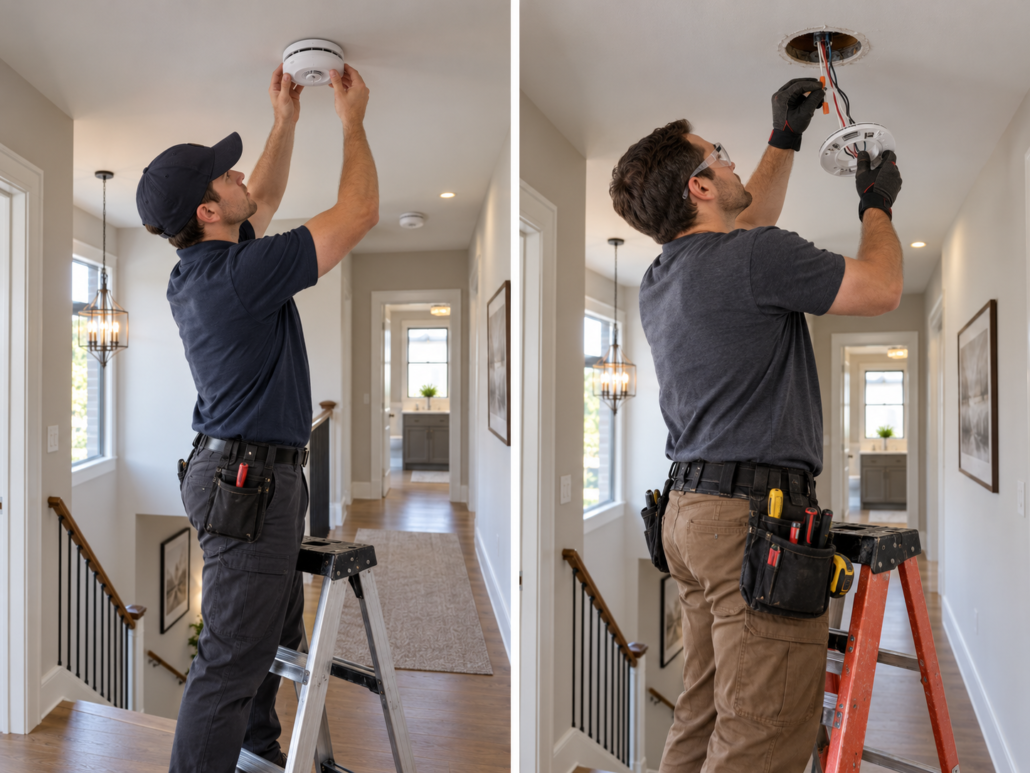
Are Wireless Fire Alarms Better for Every Home?
No. Wireless technology solves specific installation and scalability challenges, but it should not automatically replace hardwired systems.
For new construction, installing wiring while walls and ceilings are open can be practical and efficient.
The same may apply during a major renovation where electrical infrastructure is already being replaced.
Wireless systems tend to provide their strongest advantages when:
- A home is already finished
- New wiring would be disruptive
- The property has multiple levels
- Historic finishes need to be preserved
- An addition needs to connect with existing detection
- Future expansion is likely
- Interconnected alarms are needed without extensive remodeling
The best fire alarm systems for homes are selected according to the property rather than simply according to which technology is newer.
Why Professional Fire Alarm System Installation Matters
Individual smoke alarms become more effective when they are considered as parts of a complete home safety system.
A professional assessment can evaluate:
- Home layout
- Sleeping areas
- Number of floors
- Existing alarm locations
- Electrical infrastructure
- Wireless communication range
- Detector placement
- Device compatibility
- Backup power requirements
- Future expansion plans
- Testing and maintenance needs
Cyber Technologies’ approach to residential fire protection emphasizes strategically positioned smoke and heat detection, coordinated notification, backup power, proper configuration, and long-term system reliability.
For a residential wireless fire alarm system, installation also needs to verify that every device communicates reliably from its actual installed location.
Maintaining a Wireless Fire Alarm System
A fire alarm system needs ongoing attention after installation.
The U.S. Fire Administration advises homeowners to test smoke alarms monthly and recommends replacing smoke alarms when they reach the end of their useful service life, generally 10 years from the manufacture date unless manufacturer guidance specifies otherwise.
Homeowners should also follow the manufacturer’s instructions regarding:
- Battery replacement
- Device cleaning
- Functional testing
- Wireless interconnection testing
- Low-battery alerts
- Alarm replacement
With an interconnected wireless system, testing should confirm more than whether one alarm makes a sound.
Homeowners should also confirm that interconnected devices continue communicating correctly.
If activating one alarm is designed to trigger others throughout the home, that function should remain part of routine system testing.
When Does a Residential Wireless Fire Alarm System Make the Most Sense?
Wireless fire alarm systems are most valuable when homeowners need dependable interconnected protection without extensive modifications to an existing property.
They can be particularly well suited to finished homes, historic properties, renovations, home additions, multi-level houses, and properties where fire detection coverage may need to expand in the future.
The technology’s flexibility is a significant advantage, but installation convenience should never be the only consideration.
A dependable system also requires suitable detection technology, correct alarm placement, reliable communication, appropriate power and battery backup, ongoing maintenance, and compliance with applicable requirements.
The objective is not simply to make an alarm wireless. It is to create a residential fire detection system that provides consistent coverage throughout the home.
Find the Right Fire Alarm System for Your Home
Every home presents different installation conditions. Existing electrical infrastructure, finished surfaces, property size, room layout, renovations, and future plans can all affect whether wireless, hardwired, or hybrid fire alarm technology is the better choice.
Cyber Technologies provides professional residential technology and fire alarm solutions designed around the requirements of the individual property.
If you are considering a new fire alarm system or upgrading your existing home protection, visit Cyber Technologies to learn more about professional fire alarm installation and connected residential safety solutions.



Leave a Reply
Want to join the discussion?Feel free to contribute!