
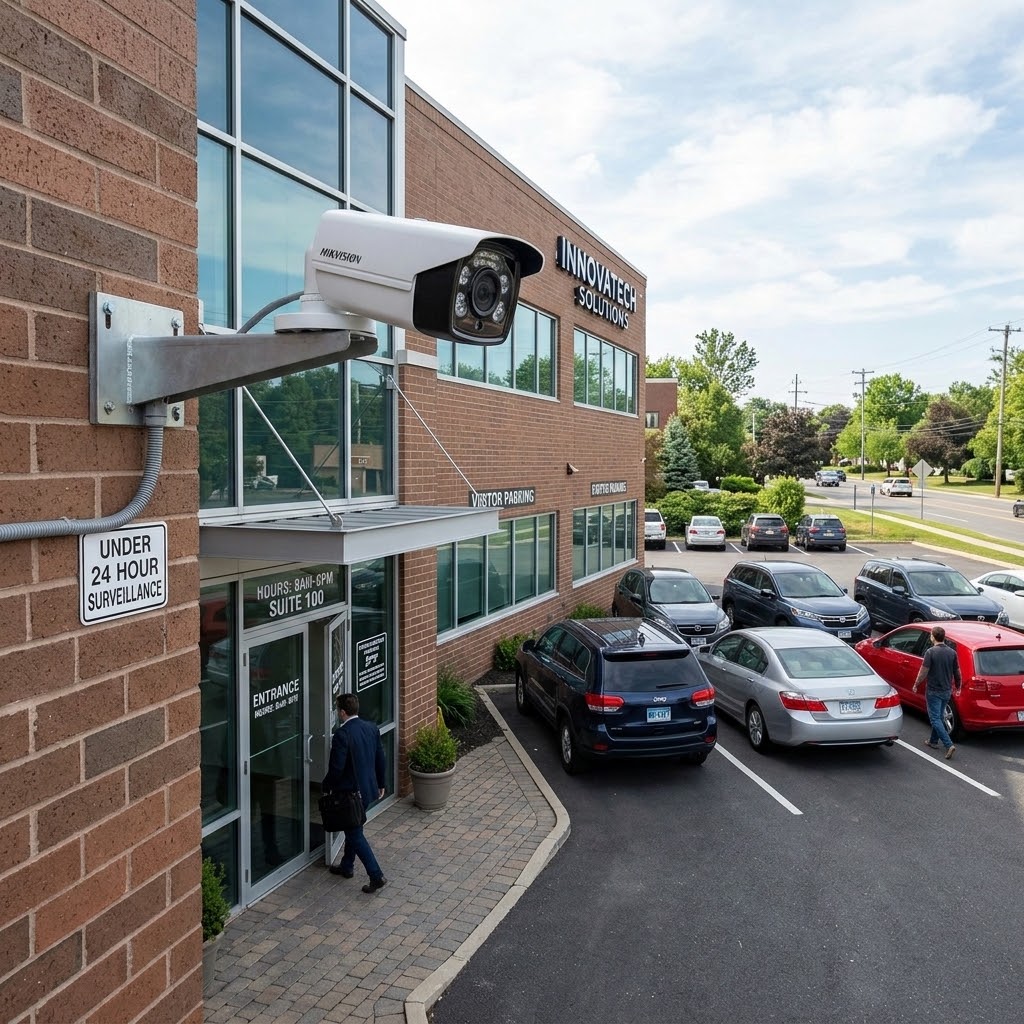
IP camera system for business: benefits, limitations, and when it makes sense
An IP camera system for business can give owners and managers clearer visibility across their property, better remote access, and more flexibility than older analog setups. For many companies, that matters because security is no longer just about recording footage after an incident. It is also about day-to-day oversight, faster response, and building a system that can grow with the business. This topic also fits Cyber Technologies’ existing service focus on business camera systems, security camera systems for business, and scalable surveillance planning.
That said, IP cameras are not automatically the right answer for every site. They depend on network health, storage planning, and basic cybersecurity discipline. Research on CCTV also shows a more measured picture than sales pages often suggest: camera systems can help reduce some types of crime, but the effect is usually modest, and results are stronger when cameras are actively monitored or paired with other security measures rather than used alone.
What is an IP camera system for business?
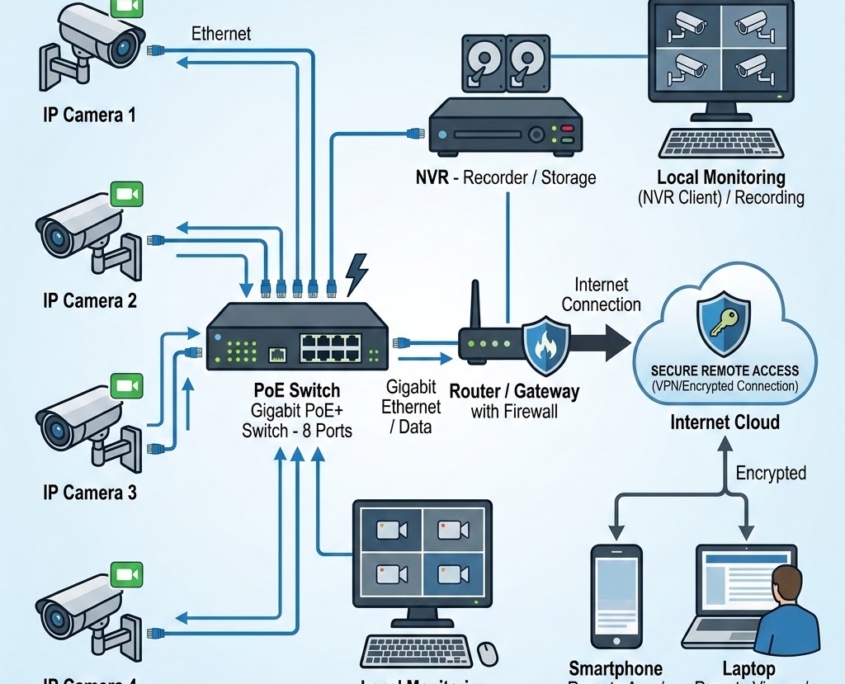
An IP camera system sends video over a network instead of using the traditional analog approach. In practice, that usually means cameras connect through structured cabling or a managed network, footage is handled by a network video recorder or video management platform, and authorized users can review live or recorded video from a phone, laptop, or central workstation. Open interoperability standards from ONVIF are widely used in the IP-based physical security market to help cameras, software, and related devices work together more reliably across brands.
For a business, that network-based design is the main difference. It makes remote access easier, supports higher-resolution streams, and can simplify expansion when a site adds doors, parking areas, storage zones, or an additional building. It also creates more planning work on the front end because bandwidth, user permissions, firmware updates, and device exposure all need to be handled properly.
The main benefits of an IP camera system for business
One major benefit is scalability. A business that starts with a front entrance, loading zone, and point-of-sale area may later want coverage for hallways, inventory rooms, perimeter doors, or a second location. IP camera systems are often better suited to that kind of staged growth because they are built around network infrastructure and centralized management rather than a more fixed legacy layout. That fits the same “scalable network performance” positioning already present in Cyber Technologies’ service content.
Another benefit is easier remote visibility. Many companies want managers to be able to check a live feed after hours, confirm an opening procedure, review a delivery dispute, or look into an alarm event without being on site. A properly configured IP system can make that much easier, especially when it is paired with role-based permissions and secure remote access. This can improve response time and internal oversight, but only when access is controlled carefully.
There is also an operational benefit. Businesses often use camera systems for more than theft deterrence. They may review receiving areas, verify who accessed a restricted space, investigate safety incidents, or confirm what happened during a customer complaint. The research based on CCTV suggests cameras can support crime prevention, especially in targeted property-crime settings, but the strongest outcomes tend to come when systems are monitored well and used as part of a broader security plan.
Interoperability is another reason many businesses choose IP. When a system uses widely adopted standards and is designed well, it can be easier to connect cameras with recorders, software, analytics tools, and other physical security products without locking the business into one narrow upgrade path. ONVIF specifically promotes standardized interfaces for IP-based physical security products and also warns buyers to verify whether products are truly conformant before purchase.
The limitations businesses should understand first
The biggest limitation is that an IP camera system is also a networked device environment. That means the cameras themselves can create cyber risk if they are deployed casually. NIST notes that many IoT devices, including security cameras, may have minimal security or be left unprotected, while CISA has repeatedly warned about risks tied to default credentials and insecure internet-connected devices. In 2024, CISA reported that threat actors had exploited IP cameras with default usernames and passwords.
A second limitation is that performance depends on the underlying network. If the site has weak switching, poor cabling, spotty wireless coverage, or no clear storage plan, the camera system may underperform even if the hardware is good. This is one reason professional planning matters. ONVIF’s own cybersecurity guidance recommends avoiding unnecessary internet exposure, separating the CCTV network with VLANs, using firewalls, limiting open ports, and keeping firmware current.
Cost can also be a limitation, although not always in the way buyers expect. The issue is not only the price of cameras. It is also the total system cost: recorder capacity, network equipment, licensing in some cases, secure remote access, installation time, storage retention goals, and ongoing maintenance. A cheaper camera can turn into a more expensive system if it creates management headaches or lacks a clean upgrade path. That is why product documentation, supportability, and conformance matter during selection.
Finally, IP cameras are not a substitute for policy. They do not replace access control, staff training, lighting, visitor procedures, or a documented response process. The best available review evidence on CCTV points in exactly that direction: use cameras as one part of a broader security approach, not as a stand-alone fix.
When an IP camera system makes sense
An IP camera system for business usually makes sense when a company needs flexibility, remote management, or room to grow. That includes businesses with multiple entrances, outdoor areas, parking lots, inventory rooms, cash-handling points, or more than one building. It also makes sense when management wants centralized visibility across several zones or future integration with video management software, analytics, or other connected security tools. That conclusion is a practical inference from the way IP-based systems are built and from the interoperability and scalability features emphasized in both ONVIF guidance and Cyber Technologies’ service materials.
It is also a strong fit for sites that want clearer audit trails. If a business regularly needs to review incidents, verify access, investigate deliveries, or monitor after-hours activity, an IP system gives more control than a minimal entry-level setup. For growing businesses, that extra control can be worth the investment because it reduces the chance of needing a full replacement later.
When it may not be the best fit
An IP system may not be the best first move for every business. A very small site with simple coverage needs, no real need for remote viewing, and a stable legacy setup may not benefit from a full IP overhaul right away. In some cases, a hybrid path makes more sense, especially if the priority is solving one clear blind spot rather than redesigning the whole security environment. That is an implementation judgment, but it follows the broader guidance that connected devices should be acquired and deployed with system-level risk, support, and security requirements in mind.
It may also be a poor fit when the network side is being ignored. If a business is not prepared to change default credentials, restrict user access, update firmware, or segment the camera environment properly, the added convenience of IP can create unnecessary exposure. CISA, NIST, and ONVIF all point toward the same basic lesson: connected security products need disciplined configuration and ongoing management.
What to evaluate before you install
Before choosing an IP camera system for business, start with the layout. Ask what needs to be seen, what incidents the system is supposed to help with, and who will actually review footage. Then look at the infrastructure: cabling, switch capacity, storage retention, power, remote access method, and cybersecurity controls.
It is also worth checking whether the products support recognized interoperability standards, whether they have a clear update path, and whether the installer can document how user permissions, segmentation, and remote access will be handled. NIST says cybersecurity documentation helps buyers make better IoT purchasing decisions, and ONVIF advises buyers to verify conformance claims rather than assuming compatibility.
A good plan should answer basic operational questions, too. Who gets admin access? How often will footage be reviewed? How long should recordings be kept? What happens if the internet service drops? How will the system be expanded later? Those are the kinds of questions that turn a camera purchase into a usable security system.
Conclusion: choose the system that fits the site, not just the spec sheet
An IP camera system for business can be a smart choice when you need scalable coverage, easier remote visibility, stronger integration options, and a cleaner path for future growth. But it works best when the business is ready to support the network, storage, and security practices that come with connected surveillance devices. The right answer is not always “more cameras” or “the newest camera.” It is the system design that matches the layout, risk profile, and daily realities of the property.
If you are weighing whether an IP camera system makes sense for your site, Cyber Technologies can help you assess coverage needs, network readiness, and long-term expansion plans so the system is practical from day one. Explore Cyber Technologies’ business security camera solutions to plan a setup that is secure, scalable, and easier to manage over time.