
Why Custom Security Solutions for Homes Outperform One-Size-Fits-All Packages
Buying a prepackaged home security kit can seem simple. The box may contain a few door sensors, a motion detector, a camera, and an app. For some small or straightforward properties, this may provide a useful starting point. However, a standard package cannot account for every home’s layout, entry points, network conditions, family routines, or plans for future upgrades.
That is why custom security solutions for homes usually provide stronger practical value. Instead of starting with a fixed list of devices, a custom system starts with the property and the people who live there. The goal is not to install the largest possible number of products. It is to select the right equipment, place it correctly, connect it securely, and make the system easy to use every day.
For homeowners in Poughkeepsie and throughout the Hudson Valley, this matters because properties can vary widely. Historic houses, newer developments, large rural lots, multi-level homes, detached garages, and mixed indoor-outdoor spaces all create different security needs.
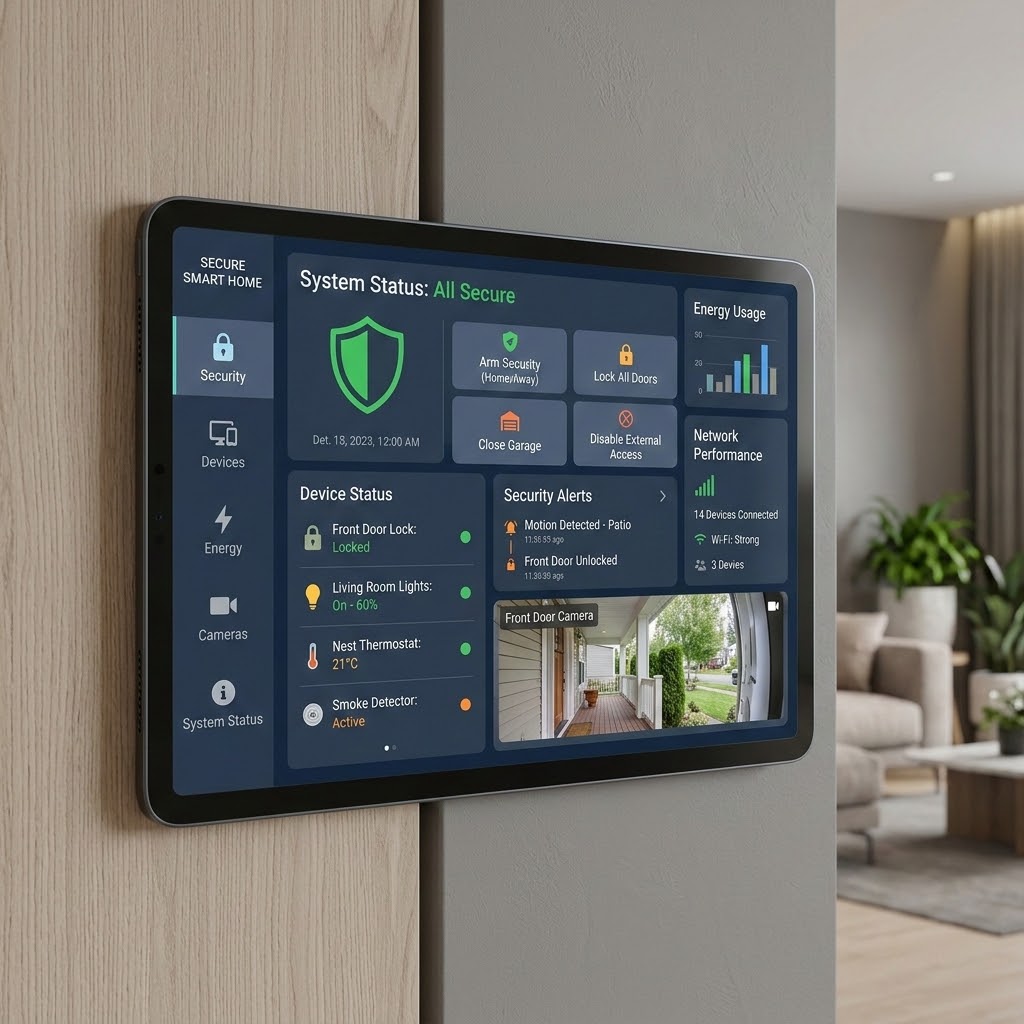
Cyber Technologies approaches residential security as part of a broader connected-home system that can include intrusion detection, access control, video surveillance, fire and smoke alarms, and continuous monitoring.
A Standard Package Assumes Every Home Has the Same Risks
One-size-fits-all packages are designed for convenience. Their contents are selected to suit a broad range of buyers, which means they are rarely designed around one specific property.
A basic kit might include two entry sensors even though a home has several exterior doors, ground-floor windows, a basement entrance, and a detached building. It might include one indoor camera when the homeowner actually needs exterior coverage. It may also rely on wireless signals that perform poorly in a large house, a masonry building, or a property with several floors.
The problem is not necessarily the quality of the devices. The problem is the lack of planning.
A custom home security assessment considers factors such as:
- Exterior doors, windows, gates, and garage access
- Areas that cannot be seen clearly from the street
- Walkways, driveways, porches, and delivery locations
- Lighting conditions during the day and at night
- Children, pets, guests, caregivers, and household schedules
- Wi-Fi strength, cabling options, and internet reliability
- Existing smart home devices and control platforms
- Preferences for alerts, video recording, and remote access
This creates a security plan based on the property’s real conditions rather than assumptions about an average home.
Custom Planning Improves Coverage at Important Entry Points
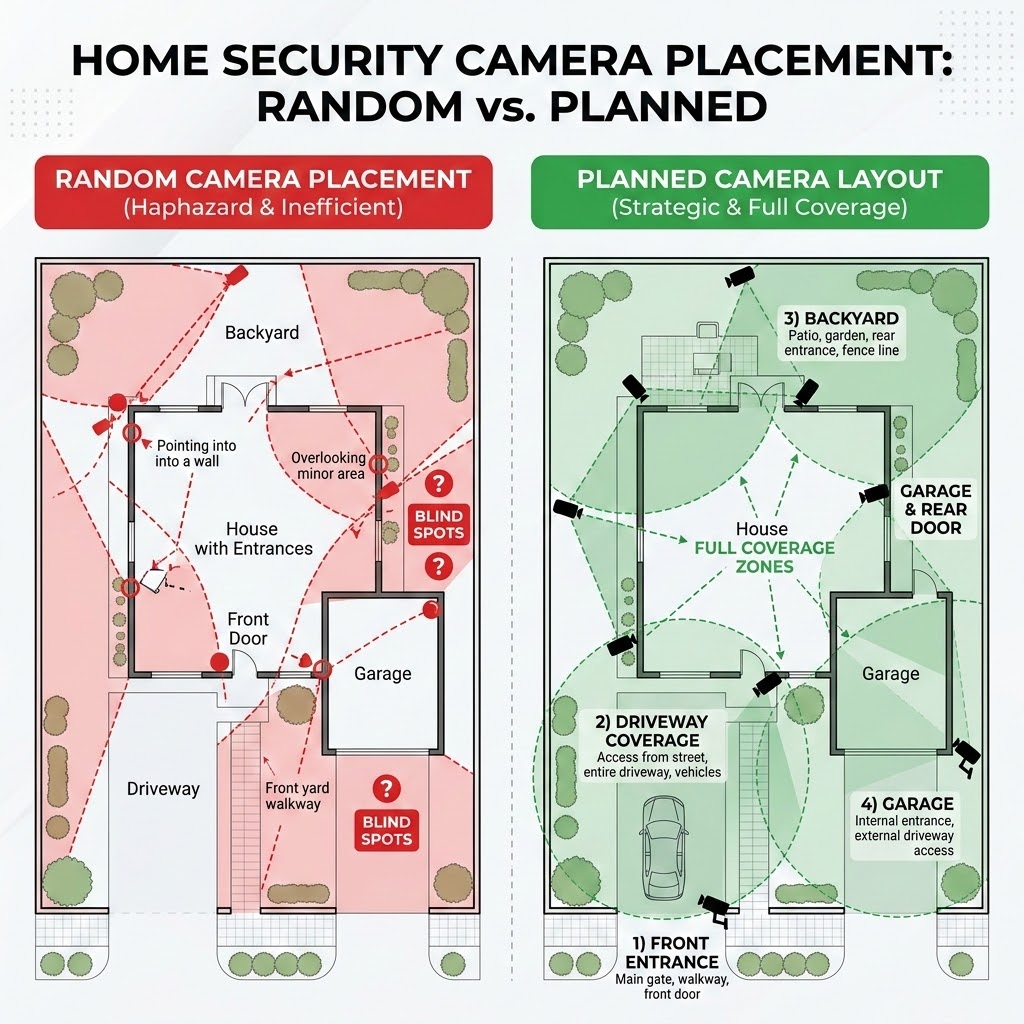
Effective home security depends heavily on where sensors and cameras are placed. More devices do not automatically create better coverage.
A camera can have a wide field of view and still miss important details because it is installed too high, aimed toward glare, or positioned too far from the area being monitored. A motion sensor may also perform poorly when placed near a heating vent, behind furniture, or in an area frequently used by pets.
Research summarized by the National Institute of Justice found that, in the property-crime cases examined, nearly 70 percent of entry points were doors or windows, while 17 percent involved unlocked property. The study was not created to recommend a specific alarm system, but it reinforces a practical point: doors and windows deserve careful attention during residential security planning.
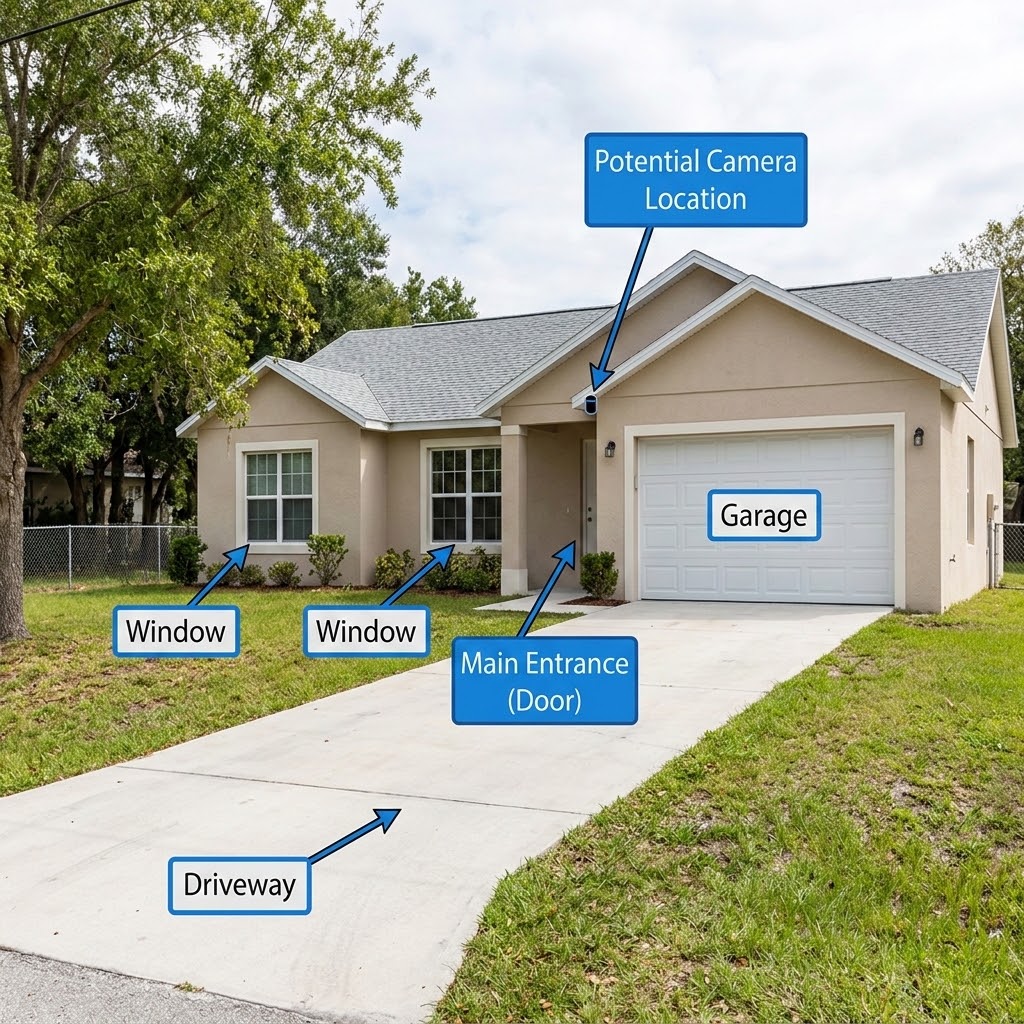
A custom design can prioritize the areas that matter most. For example, the front door may need a doorbell camera with a clear view of visitors and packages. A side entrance may need both an entry sensor and exterior lighting. A backyard with a low-visibility gate may benefit from a camera positioned to detect movement before someone reaches the house.
Professional planning also considers what each camera should capture. A useful camera view should help answer practical questions:
- Who entered the property?
- Which direction did the person come from?
- Was a vehicle involved?
- Did the person approach a door, window, gate, or garage?
- Is the image clear during both daylight and darkness?
A fixed package cannot answer these questions until someone evaluates the property and identifies the areas that require coverage.
Tailored Systems Reduce Blind Spots Without Unnecessary Devices
A common weakness in off-the-shelf systems is that homeowners must decide where everything goes without a complete coverage plan. This can lead to overlapping camera views in one area and little or no visibility in another.
Custom security camera solutions for home use, the property layout to determine the number, type, and position of cameras. Some areas may need a wide-angle view, while others require a narrower image focused on a gate, entrance, or driveway.
Indoor cameras may be unnecessary for one household but useful for another that wants to monitor an entryway, pet, or shared living area. The system should reflect the homeowner’s priorities and privacy preferences.
The same principle applies to motion detectors. Their placement should account for room dimensions, heat sources, pets, furniture, and normal movement patterns. A detector installed in the wrong location may produce avoidable notifications. A detector chosen and positioned for the room is more likely to provide useful information.
Customization is therefore not about filling a home with equipment. It is about achieving appropriate coverage with fewer gaps, fewer unnecessary alerts, and less visible clutter.
Home Alarm Systems With Cameras Work Better When Components Communicate
A package assembled from unrelated products may require several apps, separate passwords, and different alert settings. One app may control the cameras, another may operate the alarm, and a third may manage lighting or locks.
This can make the system harder to use, especially during a time-sensitive event.
Well-planned home alarm systems with cameras can connect several layers of protection. A door sensor can trigger an alert. A nearby camera can provide visual confirmation. Exterior lighting can turn on. Authorized users can then check the event remotely and decide what action is appropriate.
This type of home technology integration can include:
- Door and window sensors
- Indoor and outdoor cameras
- Motion detection
- Smart locks or controlled access
- Lighting automation
- Smoke and fire detection
- Mobile notifications
- Local or cloud-based video storage
- Professional monitoring when selected
The main benefit is that context requires coverage.
Tailored Systems Reduce Blind Spots Without Unnecessary Devices
A common. A simple alert tells a homeowner that something happened. An integrated system can help show where it happened and what caused it.
Cyber Technologies describes its residential approach as personalized control across security, networks, lighting, climate, and compatible functions available through a central app or voice interface. citeturn803153view0
Cybersecurity Must Be Part of the Security Design
Connected cameras, locks, alarms, and control systems depend on accounts, software, and home networks. Physical security and cybersecurity, therefore, need to be considered together.
The National Institute of Standards and Technology recommends planning before purchasing smart home devices, enabling stronger authentication, using unique passwords, disabling unused features, reviewing privacy updates, and considering a separate network for connected home products.
These steps are easier to apply when a home security and automation system is planned as a whole.
A professional installer can help homeowners understand:
- Which devices connect to the home network
- Which accounts have permission to access the system
- How remote camera viewing is protected
- Whether multi-factor authentication is available
- How video and personal information are stored
- How software and firmware updates will be managed
- Which features should be disabled when they are not needed
Long-term product support also matters. NIST research involving 412 smart home users noted that unsupported devices may remain connected and receive security patches, creating possible safety and security concerns.
A custom system can reduce this risk by considering product support, compatibility, update policies, and replacement options before installation. It can also create a clear record of installed devices so the homeowner knows what needs to be maintained.
A Custom System Can Adapt as the Household Changes
Security needs rarely remain identical throughout the life of a home.
A family may renovate, add a garage, install a pool, build a home office, care for an older relative, or begin receiving more deliveries. Homeowners may also decide later that they want smart lighting, access control, environmental monitoring, or additional cameras.
A fixed package can become difficult to expand when products are incompatible, the control hub has limited capacity, or the original installation did not account for future devices.
Custom smart home security solutions are designed with expansion in mind. This may involve reserving network capacity, choosing a platform that supports additional devices, installing appropriate cabling, or planning camera and sensor zones that can be extended later.
Scalability does not mean purchasing every possible feature at the beginning. It means avoiding decisions that make sensible upgrades harder or more expensive in the future.
A homeowner might begin with exterior cameras, entry sensors, and an alarm panel. Lighting automation, additional access control, or environmental sensors can then be added when the household is ready.
Personalized Alerts Make the System Easier to Use
A security system should support the household rather than interrupt it constantly. Generic settings can create too many notifications, which may eventually cause users to ignore alerts or disable useful features.
Customization allows alerts to match real routines.
A homeowner may want an immediate notification when a side gate opens at night, but not every time a family member uses the front door. A camera may need to identify people and vehicles rather than send alerts for routine movement from trees, shadows, or animals.
Different users may also require different permissions. A homeowner, family member, guest, cleaner, contractor, or caregiver may not need the same level of access.
A well-configured system can establish:
- Alert schedules for daytime, nighttime, or travel
- Separate permissions for family members and temporary visitors
- Recording rules for selected cameras and events
- Privacy zones that exclude neighboring property
- Arm and disarm routines that fit the household
- Clear steps for urgent and non-urgent alerts
The result is not simply more control. It is a system that people are more likely to use consistently.
Custom Does Not Always Mean More Expensive
One-size-fits-all packages often appear less expensive because the initial price is easy to understand. However, the purchase price does not reveal whether the package provides enough coverage, contains unnecessary devices, requires several subscriptions, or will work with future upgrades.
A custom design may have a higher initial cost, especially when it includes professional installation, network improvements, structured wiring, or higher-quality equipment. It can also prevent waste by avoiding products that do not suit the property.
The better comparison is total value over time. Homeowners should consider:
- Whether the system covers the actual risk areas
- Equipment, installation, and subscription costs
- Video storage requirements
- Product support and expected service life
- Ease of maintenance and troubleshooting
- Compatibility with existing and future devices
- The cost of correcting poor placement
- The cost of replacing unsuitable or unsupported equipment
A properly scoped custom system can also be installed in stages. The first phase may secure primary entry points and exterior areas, while later phases add home automation or additional coverage.
What a Professional Custom Security Process Should Include
A dependable smart home solutions company should do more than recommend products. The process should connect the homeowner’s priorities with the physical and technical conditions of the property.
1. Initial Consultation
The installer learns what the homeowner wants to protect, how the property is used, which alerts are valuable, and whether future automation is planned.
2. Property Assessment
Doors, windows, garages, outdoor areas, lighting, network coverage, wiring, and possible blind spots are reviewed.
3. System Design
The installer selects appropriate cameras, sensors, controls, storage options, and communication methods. The proposal should explain what each component does and why it has been included.
4. Professional Installation
Devices are positioned, connected, and configured. Camera views, network performance, sensor response, notifications, and remote access are tested.
5. User Training
Homeowners should know how to arm and disarm the system, review footage, manage users, adjust settings, and respond to alerts.
6. Ongoing Support
The completed system should have a clear plan for maintenance, software updates, troubleshooting, and future expansion.
Questions to Ask Before Choosing a Home Security System
Before selecting a packaged or custom solution, ask:
- Has the property been assessed in person?
- Which doors, windows, and outdoor areas are priorities?
- Are there blind spots in the proposed camera plan?
- Will the system work with existing smart home devices?
- How are accounts, passwords, and remote access protected?
- Where is the video stored, and how long is it retained?
- What happens if the internet connection or power goes down?
- Can the system be expanded later?
- Who provides support if a device stops working?
- Will everyone in the household be able to use the system comfortably?
Clear answers help homeowners compare systems based on suitability, security, and long-term performance rather than simply comparing the number of devices included in a box.
Choose Security Designed Around Your Home
The strongest security solution is not automatically the largest or most expensive. It is the one designed around the property’s layout, the household’s routines, the available network, and the homeowner’s priorities.
Custom security solutions for homes outperform standard packages because they address real entry points, reduce blind spots, connect alerts with useful information, support safer smart-device practices, and leave room for future changes.
They can also create a simpler experience by bringing compatible security and automation functions into a coordinated system.
Cyber Technologies provides residential security, surveillance, monitoring, fire safety, networking, and home automation solutions for properties in Poughkeepsie and the surrounding Hudson Valley region.
To discuss a security system based on your home rather than a generic package, visit Cyber Technologies and schedule a consultation.