
How home security and automation systems work together in modern homes
Modern homes are doing more than locking doors and turning lights on and off. Today, many homeowners want one connected system that helps protect the property, supports daily routines, and gives them better control whether they are at home or away. That is where home security and automation systems work best together.
Instead of treating security, lighting, cameras, door locks, thermostats, and alerts as separate tools, a well-planned setup connects them into one system. The result is a home that is easier to monitor, easier to manage, and more responsive to real-life needs. This article follows the same integrated approach reflected across Cyber Technologies’ smart home, camera, and security service focus in the attached site materials.
What it means for security and automation to work together
A traditional home security system usually focuses on intrusion detection. It may include door and window sensors, motion detectors, a control panel, and an alarm. A home automation system usually focuses on convenience, such as lighting schedules, thermostat control, smart locks, and remote access from a phone.
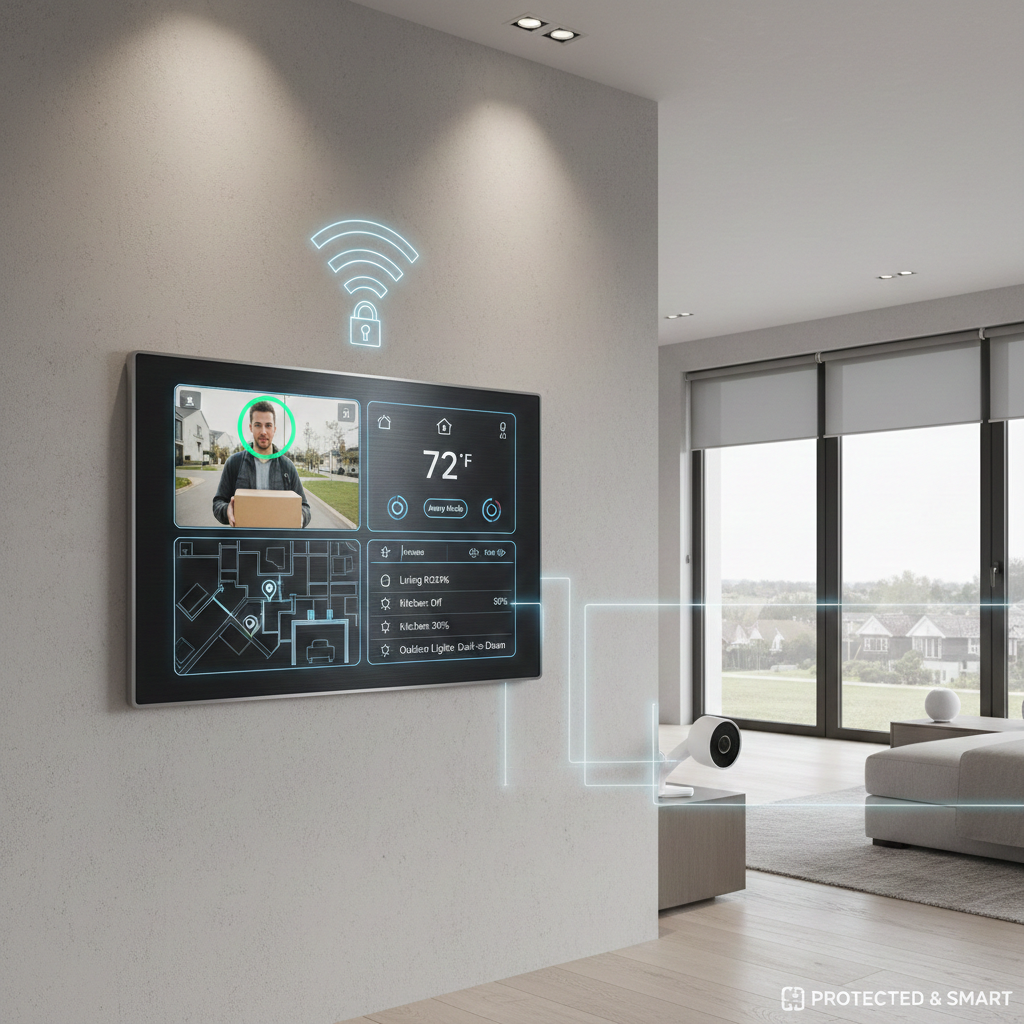
In a modern home, those two systems no longer need to operate separately. When they work together, one action can trigger another. For example, if the system is armed for the night, it can lock the doors, turn off selected lights, lower the thermostat, and send a reminder if a window is still open. If a camera detects motion near an entry point, outdoor lighting can turn on while a mobile alert is sent to the homeowner.
That kind of coordination is what makes integrated smart home security solutions useful. The goal is not to add more devices for the sake of it. The goal is to make the home more aware, more responsive, and easier to control.
The main parts of an integrated home system
Most modern setups combine a few core elements.
Intrusion protection usually starts with entry sensors, motion detectors, glass-break sensors, and alarm panels.
Video surveillance adds visual context. Cameras help homeowners confirm whether a delivery arrived, check activity around doors and driveways, or review what happened after an alert.
Access control includes smart locks, garage door controls, and video doorbells. These tools make it easier to manage who enters the home and when.
Environmental controls include thermostats, lighting control, and sometimes shade control. These may seem more related to comfort than security, but they matter because they support occupancy patterns, energy management, and remote oversight.
Life safety devices can include smoke alarms, carbon monoxide detectors, and other connected alerts. These are especially valuable when they are integrated into the same notification system as the rest of the home.
When these parts are designed to work together, the homeowner gets a clearer picture of what is happening across the property.
Why integration improves day-to-day security
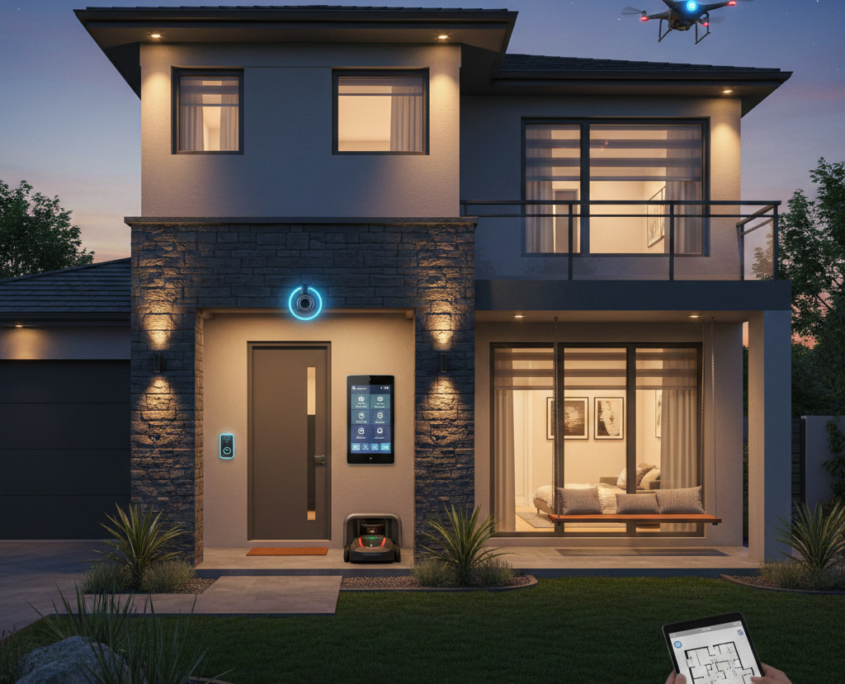
One of the biggest advantages of combining home alarm systems with cameras and automation is context. A basic alarm can tell you that a sensor was triggered. An integrated system can also tell you where it happened, show a camera view, turn on lights, and let you respond from your phone.
That matters because homeowners do not just want alerts. They want useful information. A motion alert at the front door means much more when it is paired with a live camera view and the ability to speak through a video doorbell or lock the door remotely.
Integration also reduces the chances of small issues being missed. If a garage door is left open, a connected system can send a notification. If a child arrives home from school, a smart lock event can confirm entry. If someone approaches the property at night, lights can activate automatically to improve visibility.
In other words, integrated security is not only about reacting to emergencies. It is also about improving awareness throughout the day.
How automation strengthens the security side
Automation adds structure. It helps the system do the right thing at the right time without relying on memory.
For example, a homeowner can create routines such as:
- Away mode, which arms the system, locks doors, adjusts the thermostat, and turns off selected lights
- Night mode, which secures entry points, activates perimeter cameras, and leaves pathway lights on
- Vacation mode, which simulates occupancy through lighting schedules while maintaining alerts and remote camera access
These routines make protection more consistent. Many security gaps happen because people are busy, distracted, or simply forget a step. Automation helps reduce that kind of human error by turning repeat actions into scheduled system behavior.
This also makes custom security solutions for homes more practical. Every property has different entry points, daily habits, and priorities. A condo, a single-family house, and a larger estate should not all be programmed the same way. A tailored setup works better because it reflects how the home is actually used.
The role of cameras in a connected home
Cameras are one of the clearest examples of why security and automation belong together. On their own, cameras record and stream video. When integrated, they become part of a larger response system.
A doorbell camera can trigger a phone notification, record a clip, and let the homeowner unlock the door remotely for a trusted visitor. An exterior camera can trigger floodlights after dark. Indoor cameras can help verify whether pets, children, or service providers are where they should be.
This does not mean every home needs cameras in every room. It means camera placement should be strategic. Good design focuses on entries, driveways, side yards, garages, and other areas where visibility matters most. Professional planning also helps reduce blind spots and avoid poor angles that make footage less useful.
That is why home technology integration matters. The value comes from how well the devices work together, not just how many devices are installed.
How automation supports safety beyond intrusion
Integrated systems can do more than respond to break-ins. They can also help with life safety and basic home risk management.
Connected smoke alarms are one example. The National Fire Protection Association says the risk of dying in a home fire is cut by 60 percent when working smoke alarms are present. When those alarms are tied into a connected home system, alerts can reach the homeowner faster, even when no one is in the house.
That same principle applies to other connected alerts, such as carbon monoxide notifications, water leak sensors near appliances, or temperature alerts in sensitive spaces. The point is simple: the sooner a homeowner knows something is wrong, the sooner they can act.
This is one reason many homeowners now see security and automation as part of one larger home protection strategy rather than two separate categories.
The comfort and energy side of the equation
Security is usually the first reason people look at a smart home system, but comfort and efficiency are often what make the system feel worthwhile every day.
A connected thermostat, for example, can respond to occupancy routines. When the home is empty, it can shift to energy-saving settings. When the family returns, it can return to a comfortable temperature before they walk in. The U.S. Department of Energy says homeowners can save as much as 10 percent a year on heating and cooling by turning the thermostat back 7° to 10°F for 8 hours a day, and smart or programmable controls make that easier to manage consistently.
Lighting automation can also support both convenience and security. Exterior lighting can respond to motion or schedules. Interior lighting can create the appearance of occupancy while the homeowner is away. Pathway and stair lighting can improve visibility at night.
These features may seem small on their own, but together they make the home easier to live in and easier to manage.
Why professional integration matters
A modern connected home depends on more than the devices themselves. It depends on planning.
A strong home automation system installation starts with the property layout, network strength, entry points, camera sightlines, user preferences, and future growth plans. Without that planning, even good hardware can feel frustrating. Homeowners may end up with multiple apps, inconsistent alerts, dead spots in Wi-Fi coverage, and devices that do not communicate well.
Professional integration helps solve that. It looks at the whole environment, including structured placement, stable connectivity, app organization, automation logic, and long-term reliability. It also makes expansion easier. A homeowner may start with cameras and locks today, then add lighting control, smoke detection integration, or audio-video features later. A well-designed system supports that growth.
This is especially important for custom security solutions for homes, because no two properties work exactly the same way.
Do not overlook cybersecurity
Any connected home needs basic cybersecurity attention. That is not a reason to avoid smart home technology. It is a reason to install and manage it carefully.
NIST advises consumers to plan before buying connected devices, enable strong authentication, keep software updated, and pay attention to router and network security because smart home products are part of a larger connected environment.
For homeowners, that means asking practical questions:
Is the device getting regular updates?
Does it support strong passwords or multi-factor authentication?
Will the installer help secure network settings and remote access?
Can the system be managed clearly without leaving unused features exposed?
Security in a connected home is not just about catching someone outside. It is also about protecting the system itself.
What homeowners should think about before choosing a system
Before installing anything, it helps to think through a few priorities.
First, decide what problem you want the system to solve. Some homeowners care most about entry-point protection. Others want cameras, package awareness, remote access, or better control over energy use.
Second, think about the home itself. Size, layout, construction, Wi-Fi coverage, and the number of entry points all affect what type of system makes sense.
Third, think long term. A good system should not only meet current needs. It should also leave room for future upgrades.
Finally, think about usability. The best system is one that fits the household’s daily habits. If control is confusing or alerts are excessive, people stop using the system well. Simplicity matters.
Conclusion
Home security and automation systems work best when they are planned as one connected solution. Cameras, alarms, locks, lighting, thermostats, and safety alerts all become more useful when they support each other instead of operating in isolation. The result is a home that is easier to monitor, easier to manage, and better prepared for everyday life.
If you are considering a smarter, more connected approach to home protection, Cyber Technologies can help you plan a system that fits your property and your priorities. Explore solutions for smart home security, automation, cameras, and integrated home technology.